
 EN
EN
 English
 Español
 عربى
عربى 中文简体
中文简体

-
+86-13616168066

TEL:
-
+86-510-86525168

Fax:
-
No.8 North Huanzhen Road, Mazhen,Xuxiake Town,Jiangyin City,Jiangsu Province,China

Address:
Feel Free To Contact Us :
-
+86-13616168066
-
-

Jun. 12, 2026
Industry News
Click Vinyl Plank Flooring: What the Specs Mean & How to Choose Right (2026)
Content
Most flooring regrets come from the same mistake: buying based on looks, then discovering the specs don't match the room. Click vinyl plank flooring is one of the most practical investments you can make for a home — but only if you pick the right construction for your specific situation. This guide cuts straight to what actually matters.
Why the Locking System Is the First Thing to Evaluate
The click mechanism determines everything downstream — stability, repairability, and how forgiving the floor is over time. Unlike glue-down installations that bond permanently to the subfloor, click lock vinyl flooring floats as a unified surface, held together entirely by its interlocking profile. This means no adhesive mess, no drying time, and — critically — individual planks can be replaced if one gets damaged years later.
The Valinge click system (used in Herewin's SPC line) is the industry benchmark. Planks angle in at the long side and drop-lock at the short end. When installed correctly, the joint resists lateral movement and edge lifting, even in rooms with mild humidity swings.
One practical note: if a plank doesn't click smoothly, stop forcing it. Debris in the joint or a wrong angle damages the lock profile permanently. Reposition first.
Reading the Specs: What the Numbers Actually Mean
Size and gloss ratings aren't just product details — they're decision tools. Here's how to read them:
| Dimension | Options | Best For |
|---|---|---|
| Length | 1220 / 1520 / 1800 mm | Longer planks = fewer end joints = more open feel |
| Width | 125 / 150 / 180 / 228 mm | Wider planks suit large rooms; narrower suit hallways |
| Gloss Level | 5–10 (low sheen) | Lower gloss hides foot traffic and micro-scratches better |
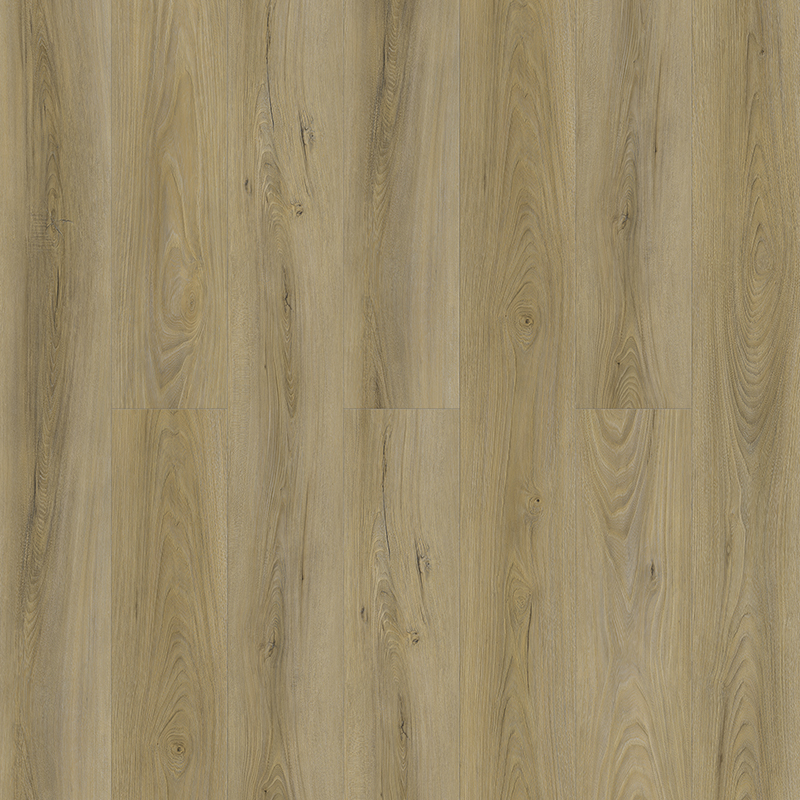
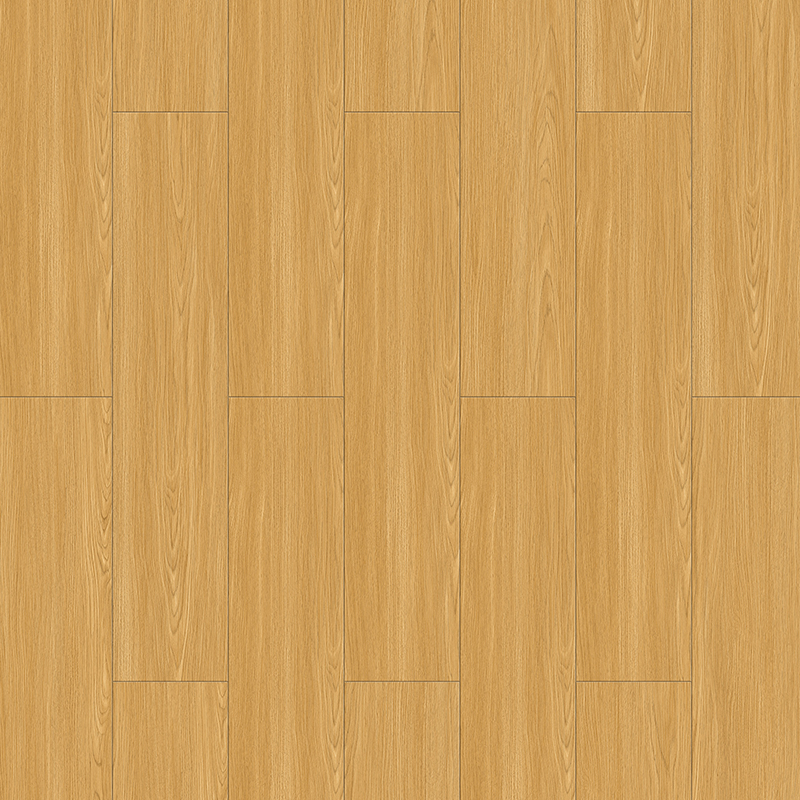
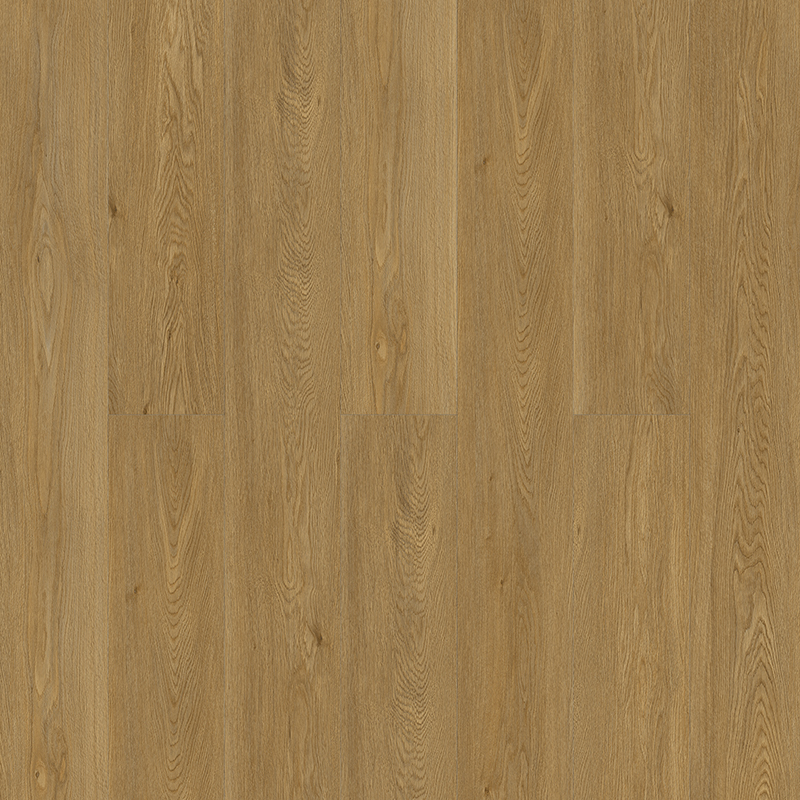
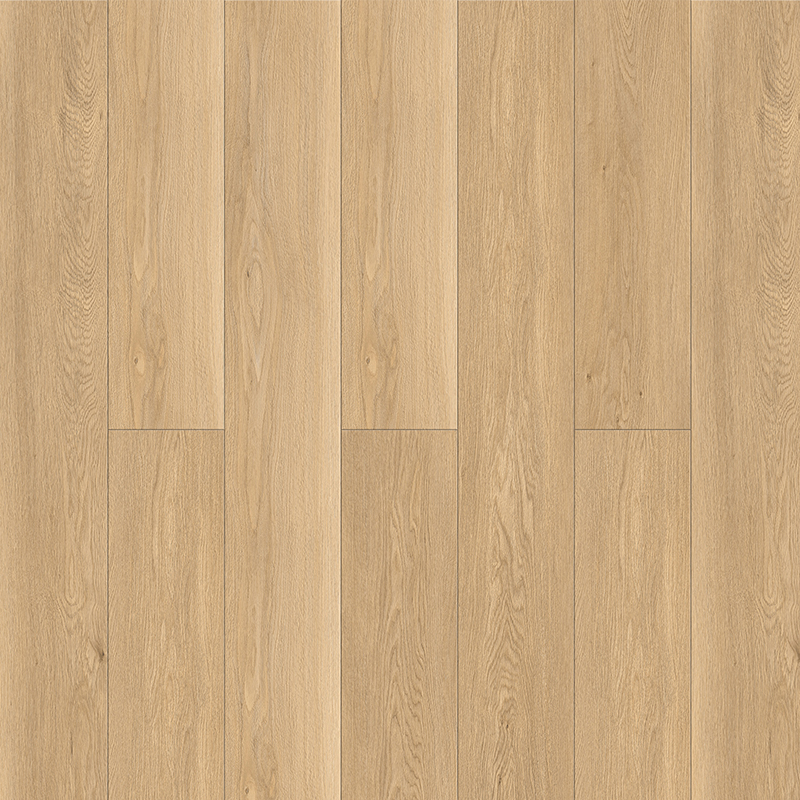
Edge treatment matters more than most buyers realize. A micro-bevel edge adds subtle shadow lines between planks, making the floor read as individual boards. A V-bevel deepens that effect. Painted-bevel edges add a refined finish that closely resembles real timber — a detail that becomes obvious when you compare side by side.
Core Construction: SPC, EPC, or ABA?
The core is what separates floors that last from floors that disappoint. Three core types dominate the market, and each is built for a different priority:
- SPC (Stone Plastic Composite) — A rigid limestone-polymer core. Dimensionally stable, fully waterproof, and handles temperature fluctuations without warping. The go-to for kitchens, bathrooms, and basements. Herewin's SPC click vinyl plank flooring features UV coating, EIR embossing, and BP brushed textures for a realistic wood appearance.
- EPC (Enhanced Polymer Composite) — A hybrid core that balances rigidity with a softer underfoot feel. Good acoustic performance and a natural surface texture make it well-suited for living rooms and bedrooms. See Herewin's EPC click lock vinyl flooring in tile and stone patterns.
- ABA (All-Bamboo-Ash) — A formaldehyde-free multi-layer construction built for households with health or environmental priorities. Zero added formaldehyde puts it in a different category from standard vinyl composites. Explore the ABA click vinyl plank options for green-certified projects.
The Feature Checklist That Protects Your Investment
Not every product marketed as "waterproof vinyl plank" delivers equal performance. Look for these verified features before committing:
- 100% Waterproof core — The core itself must be waterproof, not just the surface. SPC qualifies; WPC does not always.
- UV coating — Protects against color fade from sunlight and surface wear from daily foot traffic.
- Anti-slip rating — Essential for kitchens and bathrooms. Check for R-value or coefficient of friction data in the product spec sheet.
- Fire retardant classification — Required for commercial applications and increasingly expected in residential buildings.
- Sound barrier — Either built into the plank or achieved through a pre-attached underlayment. For multi-story apartments, this is non-negotiable.
If noise is a primary concern, Herewin's ultra-quiet click lock vinyl flooring uses EIR (Embossed in Register) technology with an integrated sound-dampening layer — the grain texture aligns precisely with the embossing for a more realistic feel while significantly reducing impact noise.
Five Installation Details That Determine the Final Result
The locking system makes installation accessible — but these details separate a floor that lasts 20 years from one that develops problems in two:
- Subfloor flatness. Allow no more than 3/16 inch variance over 10 feet. Humps cause the joints to flex under foot traffic and eventually separate.
- Expansion gap. Leave 1/4 to 3/8 inch around all perimeter walls and fixed objects. Skipping this causes buckling in summer heat.
- Acclimation. Let planks sit in the room for 48 hours before installation so they adjust to the ambient temperature and humidity.
- Stagger end joints. Maintain at least 6–8 inches between end joints in adjacent rows. Too-close joints create visible patterns and weaken structural integrity.
- Walk on it immediately. No adhesive means no curing time. The floor is ready for light foot traffic as soon as the last plank clicks into place.
Maintenance: Keep It Simple
A well-chosen click vinyl plank floor is one of the easiest surfaces to maintain long-term. Sweep or vacuum regularly (no beater bar — it can scuff the surface). Damp-mop with a pH-neutral vinyl cleaner. Avoid steam mops, abrasive scrubbers, and wax — the UV coating already provides the sheen; wax disrupts it. Use felt pads under furniture and replace rubber-backed mats, which can discolor the surface over time.
One underrated tip: rotate area rugs annually in sun-exposed rooms to prevent uneven fading patterns. Direct prolonged sunlight — even through Low-E glass — can gradually affect surface color over years.


LET'S WORK TOGETHER
WELCOME TO JOIN!
-
+86-13616168066
-
[email protected]

-
+86-510-86525168
-
No.8 North Huanzhen Road, Mazhen,Xuxiake Town,Jiangyin City,Jiangsu Province,China
JOIN OUR MAILING LIST
Copyright © 2025 Jiangsu Herewin Environmental Technology Co., Ltd. All Rights Reserved. Vinyl Plank Flooring Manufacturers SPC Rigid Core Flooring Factory
