
 EN
 English
 Español
 عربى
 中文简体


-
+86-13616168066

TEL:
-
+86-510-86525168

Fax:
-
No.8 North Huanzhen Road, Mazhen,Xuxiake Town,Jiangyin City,Jiangsu Province,China

Address:
Feel Free To Contact Us :
-
+86-13616168066
-
-

Nov. 25, 2026
Industry News
How Long Does Vinyl Flooring Last? Real Service Life by Wear Layer and Core
Content
- 1 How Long Does Vinyl Flooring Last on Average?
- 2 What Actually Determines How Long Vinyl Flooring Lasts
- 3 Wear Layer Thickness: The Number That Decides Everything
- 4 Installation and Subfloor Conditions
- 5 Maintenance That Quietly Adds Years
- 6 Repair or Replace: How to Read the Warning Signs
- 7 Vinyl Flooring Lifespan: Common Questions
A seven-year-old vinyl plank floor comes up in strips: the printed grain still sharp, the surface still glossy, and the long seams already 2 mm apart. Nothing wore out. The planks moved because the subfloor was out of flatness and the installer left no expansion gap at the wall. That pattern sits behind most short-lived vinyl floors, and it is why the lifespan question almost never has one clean answer.
How Long Does Vinyl Flooring Last on Average?
Vinyl flooring lasts 10 to 20 years in a typical home, and rigid SPC planks with a 20 mil wear layer regularly reach 15 to 25 years. Sheet vinyl sits at the low end at 10 to 15 years, while a thin 6 mil clearance plank in a busy hallway can look tired by year eight.
10-20years, typical residential plank
15-25years, 20 mil rigid SPC
10-15years, glued sheet vinyl
20-30years, commercial wear layer
Read the fine print
Warranty life and service life are two different numbers. A 25 year wear layer warranty covers the printed film wearing through. It rarely covers a loosened click joint, a cupped plank, or colour fade beside a south-facing window.
Nearly all of the spread inside those ranges comes from four variables: wear layer thickness, core composition, subfloor preparation, and the cleaning routine. Pattern, plank length and bevel style barely move the number.
What Actually Determines How Long Vinyl Flooring Lasts
Wear layer thickness sets the ceiling on service life, and installation quality decides how close to that ceiling you actually get. A well-fitted 12 mil plank on a flat, dry subfloor will outlast a neglected 20 mil plank almost every time.
| Floor type | Core | Typical wear layer | Realistic service life | Holds up best in |
| Sheet vinyl | Felt or homogeneous PVC | 0.5 to 0.7 mm | 10 to 15 years | Kitchens, rental turnover |
| Standard click plank | Foamed WPC | 6 to 12 mil | 10 to 18 years | Bedrooms, living rooms |
| Rigid SPC plank | Stone-plastic composite | 12 to 20 mil | 15 to 25 years | Hallways, kitchens, pets |
| Commercial SPC | Stone-plastic composite | 28 to 40 mil | 20 to 30 years | Shops, offices, rentals |
Four variables that move the number most
- Wear layer in mil, not overall thickness. A 5 mm plank with an 8 mil film wears through faster than a 4 mm plank with 20 mil.
- Core stability under heat. Stone-plastic cores resist denting and expansion better than foamed cores in sun-exposed rooms.
- Subfloor flatness and moisture. Voids under a plank flex the click joint until the locking tab fails.
- Point loads and grit. Chair casters, piano legs and tracked-in sand do more damage than foot traffic.
A floor that fails before year ten is usually a specification or installation problem, not a material age problem. Check the wear layer rating before you blame the product.
Rooms with heavy footfall and rolling loads need a commercial rating from the start. Our guide to SPC flooring in high-traffic areas walks through the wear layer and core specs that survive that kind of use.
Wear Layer Thickness: The Number That Decides Everything
A 20 mil wear layer typically delivers five to eight more years than a 12 mil layer in the same room, and 1 mil equals 0.0254 mm. That makes a 20 mil film roughly half a millimetre of transparent vinyl standing between foot traffic and the printed design.
6-8 mil8-12 yrs
12 mil10-18 yrs
20 mil15-25 yrs
28-40 mil20-30 yrs
Service life ranges by wear layer thickness for click vinyl plank in residential and light commercial use.
Where to find it
The wear layer figure lives on the specification sheet, not the retail box. If a listing quotes only total thickness in millimetres, ask for the mil rating in writing before ordering.
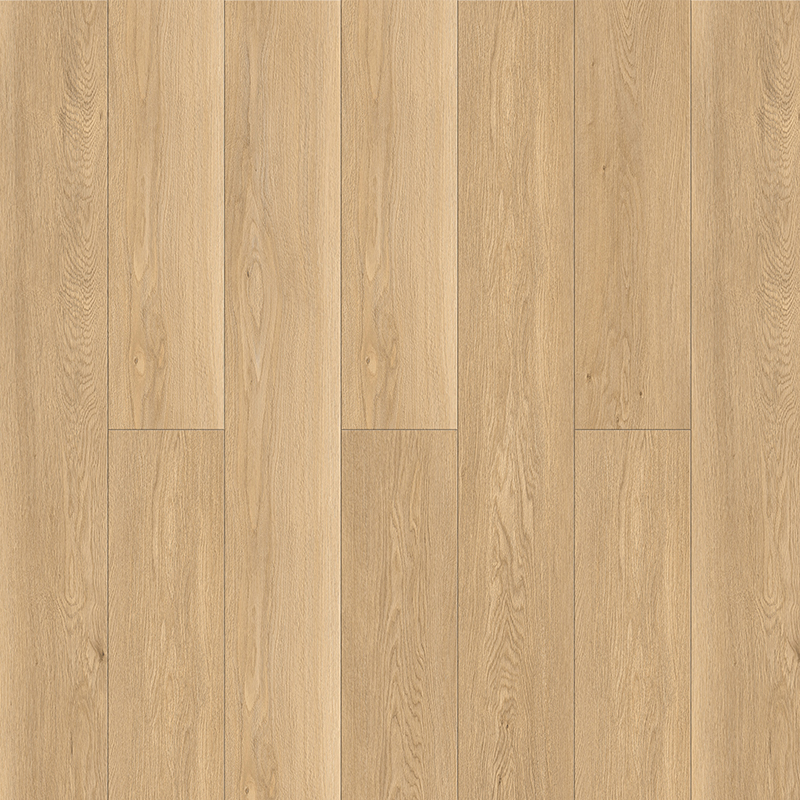
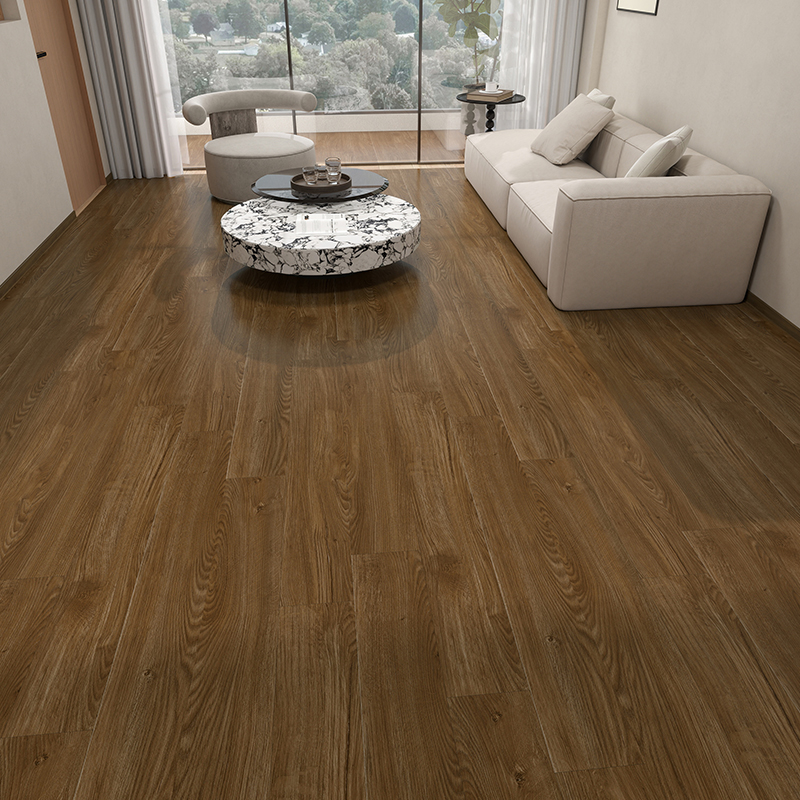 Natural Oak SPC Click Vinyl Plank FlooringWaterproof SPC click plank with natural oak grain, durable UV coating and bevel options for kitchens, living spaces and moisture-prone rooms.View Product →
A rigid stone-plastic plank such as a natural oak SPC click plank pairs that heavier film with a core that does not swell, which is the combination most households should be shopping for. For a room where the floor has to carry noise as well as traffic, an embossed-in-register quiet plank is the better match.
Installation and Subfloor Conditions
Two rooms with identical planks can differ by ten years of service life purely on installation. Flatness, moisture and expansion gaps decide whether the locking system survives its first heating season.
- Check flatness with a 2 m straightedge. Most rigid cores tolerate no more than 3 mm of deviation across that length, and high spots telegraph through within one season.
- Test the slab for moisture. A plastic sheet taped down for 24 hours shows trapped vapour before you seal the floor under a vapour-tight plank.
- Acclimate cartons for 24 to 48 hours in the room, at 18 to 29 C, stacked flat and out of direct sun.
- Leave an 8 to 10 mm expansion gap at every wall and fixed object, then hide it under skirting instead of filling it with sealant.
Site reality
In renovation work the subfloor is the wildcard. Grinding a 4 mm ridge flat costs an hour and adds years, while skipping it turns a 20 mil floor into an eight-year floor with a rattling seam.
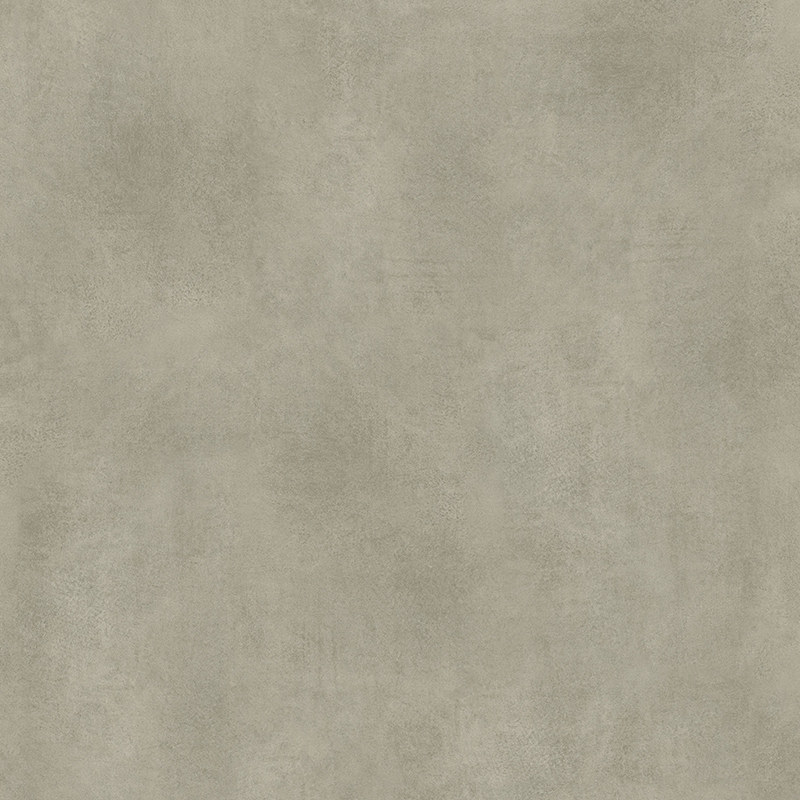 Light Beige-Grey Cement Tile EPC Click Vinyl PlankCement-tone EPC click plank with subtle stone texture and waterproof wear-resistant surface, suited to flat renovations and calm contemporary interiors.View Product →
Lighter engineered cores are easier to handle on upper floors and over existing hard surfaces, and a cement-tone EPC click plank is a common pick for flat renovations where lifting the old floor is not an option. Our manufacturing and testing background explains how core density and film thickness are checked before a batch ships.
Maintenance That Quietly Adds Years
Cleaning habits shift service life by two to five years, and the damage is almost always cumulative rather than dramatic. Abrasion and chemical dulling remove microns of film that never come back.
- Vacuum grit before it turns into sandpaper. Small particles under a chair glide cut into the film far faster than footfall.
- Use a pH neutral cleaner. Vinegar and citrus degreasers dull the urethane coating and leave a haze that reads as wear.
- Skip the steam mop. Heat plus moisture pushes at the seams, and seam lifting is the most common repairable failure on click floors.
- Fit felt pads and use entry mats. Point loads from appliance feet dent foamed cores more than stone-plastic ones.
Rule of thumb
If water beads on the surface, the wear layer is intact. Once it darkens in patches and stops beading, the protective coating has thinned and cleaning needs to become gentler.
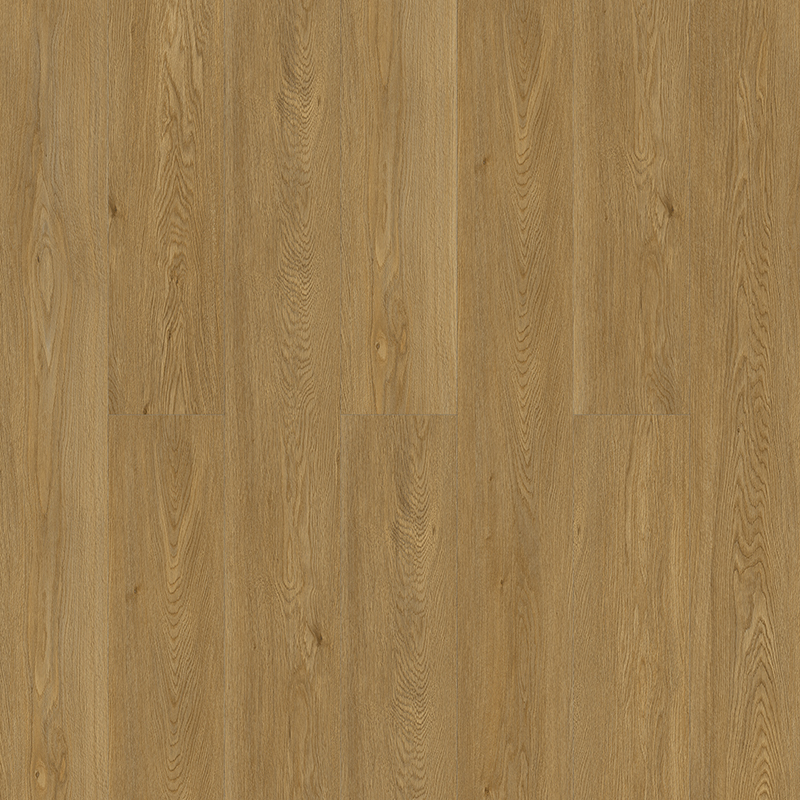
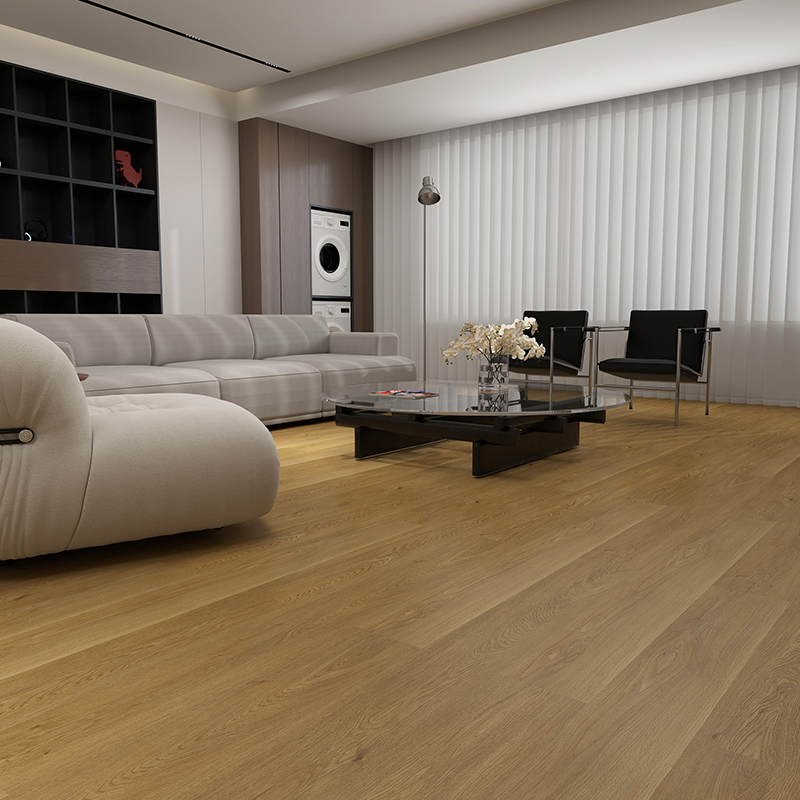 Warm Brown Oak Embossed Ultra-Quiet Click Vinyl PlankUltra-quiet waterproof click plank with in-register oak grain and textured surface, offering a lifelike timber look for residential and commercial interiors.View Product →
Textured surfaces need a softer touch than smooth ones. An embossed-in-register oak plank holds dust in its grain, so a microfibre mop with a neutral cleaner does the job without scrubbing the relief flat.
Repair or Replace: How to Read the Warning Signs
Replace when the printed pattern is visible through the wear layer; repair when the failure is isolated to a seam, a doorway plank, or impact damage. Everything in between is a judgement call on cost per square metre.
Repair makes sense when
- Damage sits in one or two planks near a doorway
- Seams have opened but the film is still intact
- The floor is under eight years old and was fitted well
Replace when you see
- Pattern loss in traffic lanes where the film has gone
- Cupping or curling across several square metres
- Repeated seam failure after two repairs in one room
Cost check
A single-plank swap on a click floor takes under an hour. Replacing a whole room costs the material again plus skirting work, so repair first whenever the wear layer is still doing its job.
Age alone never justifies a new floor. Yellowing, gapping and dull patches each point to a different cause, and two of those three are fixable without lifting the room.
Vinyl Flooring Lifespan: Common Questions
Does vinyl flooring last longer than laminate?
In wet rooms, yes. Rigid SPC and WPC cores are waterproof through the body of the plank, while laminate swells at the seams once water reaches the core. In a dry bedroom both materials land at roughly 15 to 20 years.
Is a 20 year warranty a 20 year floor?
Not automatically. Most vinyl warranties are prorated and cover wear layer failure only, so installation faults and moisture damage fall outside the cover.
Does thicker vinyl last longer?
Thickness and wear layer are separate specifications. A 4 to 6 mm plank improves acoustic performance and dent resistance, but the mil rating on the film is what controls how long the surface survives.
Can vinyl flooring be refinished?
No. Once the printed design shows through the wear layer, that plank is finished, and the practical answer is swapping individual planks or the full run.
Short version: buy the wear layer for the room, install it flat and dry, and clean it gently. That combination is what turns a 12 year floor into a 22 year floor.


LET'S WORK TOGETHER
WELCOME TO JOIN!
-
+86-13616168066
-
[email protected]

-
+86-510-86525168
-
No.8 North Huanzhen Road, Mazhen,Xuxiake Town,Jiangyin City,Jiangsu Province,China
JOIN OUR MAILING LIST
Copyright © 2025 Jiangsu Herewin Environmental Technology Co., Ltd. All Rights Reserved. Vinyl Plank Flooring Manufacturers SPC Rigid Core Flooring Factory
