
 EN
 English
 Español
 عربى
 中文简体


-
+86-13616168066

TEL:
-
+86-510-86525168

Fax:
-
No.8 North Huanzhen Road, Mazhen,Xuxiake Town,Jiangyin City,Jiangsu Province,China

Address:
Feel Free To Contact Us :
-
+86-13616168066
-
-

Nov. 06, 2026
Industry News
A Practical Guide to wpc vs spc: Uses, Selection, and Key Considerations
Content
Two planks can look identical under showroom lighting and behave nothing alike after three winters in a heated room. Most of the time the print and the wear layer are not the variable; the core is. SPC (stone plastic composite) and WPC (wood plastic composite) are both rigid-core vinyl, but their cores differ enough in density, thickness and thermal movement that the right answer changes room by room.
A 4.5 mm SPC plank on a flat concrete slab and a 10 mm WPC plank on the same slab are solving different problems. One is a rigidity decision. The other is a comfort and acoustics decision. Getting that framing right before you compare prices saves far more money than arguing over a few cents per square foot.
Short version: choose SPC when the floor must stay flat under load and heat, choose WPC when comfort and impact noise matter more than dent resistance.
What WPC and SPC Cores Actually Are
SPC is a dense limestone-filled PVC core; WPC is a foamed PVC core, usually with wood flour added. Nearly every other difference between the two follows from that single fact: thickness, weight, price, sound behaviour and how the plank reacts to a chair leg.
60-70%Limestone filler by weight in a typical SPC core
1.9-2.1SPC density in g/cm3, roughly double a foam core
8-12 mmCommon overall thickness for a WPC plank
Definition: SPC (stone plastic composite) is a rigid vinyl plank core built from calcium carbonate, PVC and stabilisers, usually 4-6 mm thick, topped with a printed decor film and a clear wear layer of 0.3-0.5 mm.
WPC keeps the same printed surface and click profile but foams the core with air. The result is a plank that is roughly half as dense and about twice as thick. That extra thickness does real work: it bridges small subfloor dips, softens the feel underfoot and deadens the hollow sound of a footfall in an empty room.
Because the core is the variable, most buying mistakes happen at the spec sheet rather than at the till. Two planks can share a 0.5 mm wear layer and a 5G click and still belong in completely different rooms. If you want the wider family tree first, our breakdown of rigid core flooring types and key specs covers the classifications before you shortlist.
SPC vs WPC: The Side-by-Side Comparison
The table below reflects the ranges most published datasheets agree on. Read the thickness and density rows first, because they explain the rows underneath them.
| Attribute | SPC core | WPC core |
| Core composition | Limestone filler plus PVC | Foamed PVC with wood flour |
| Overall thickness | 4-6 mm | 8-12 mm |
| Density | About 1.9-2.1 g/cm3 | About 1.0-1.2 g/cm3 |
| Dent and point load | High static load capacity | Moderate; heavy legs need pads |
| Feel underfoot | Hard, thin, direct | Warmer, slight give |
| Impact sound | Louder unless an underlay is added | Naturally quieter |
| Thermal movement | Small; tighter perimeter gaps | Larger; wider gaps required |
| Subfloor flatness | 3 mm over 2 m, no voids | Same tolerance, more forgiving of dips |
| Typical rooms | Kitchen, hallway, rental, retail | Bedroom, upper floor, apartment |
| Relative cost | Lower per square metre | Higher per square metre |
The thickness row catches most buyers. A 10 mm WPC is not "more floor" than a 5 mm SPC in any structural sense; the extra millimetres are mostly air and foam, and they change how the floor feels rather than how much load it can take.
A dense core resists a piano leg. A foam core resists a bare foot at 6 am. Decide which of those two customers you are building the room for.
Comfort, Sound and How Each Core Ages
WPC feels warmer and quieter underfoot, and the test numbers support it: a foamed core with an attached pad reduces impact noise far more than a bare thin stone core. SPC closes most of that gap once you add an acoustic underlay, but you then pay for the underlay and lose a few millimetres of doorway clearance.
SPC 4 mm, no underlay 6 dB
SPC plus 1.5 mm IXPE 15 dB
WPC 10 mm, built-in pad 17 dB
WPC plus 2 mm cork 21 dB
Indicative impact sound reduction from room tests; results move with slab type, underlay and the size of the room. Treat them as ranking, not as certification.
Acoustic caveat: if the building rule is written as FIIC 50 or above, test the whole assembly, not the plank. A 4 mm SPC on a 1.5 mm IXPE pad usually clears it; the same plank glued down to concrete on its own usually does not.
On ageing, the core is rarely what fails first. The wear layer and the click joint decide the service life. A 0.5 mm wear layer outlasts a 0.3 mm one in a hallway no matter which core sits underneath. Foam cores do mark under sustained point loads, so a WPC that looks tired at year eight is usually a furniture problem rather than a material failure.
Water, Heat and Installation Reality
Both cores are fully waterproof. They are not equally stable under heat, and that difference is where most callbacks come from. Water on the surface is a non-event; a sunroom that reaches 40 degrees C behind glass is not.
- Check flatness with a 2 m straightedge: no gap over 3 mm, and no voids under the plank. Foam cores hide shallow dips better than stone cores, but neither forgives a 6 mm hump at a doorway.
- Acclimatise flat and unopened for 24 to 48 hours at 18 to 26 degrees C in the room where the floor will live, not in a cold garage.
- Set the expansion gap deliberately: 6 to 8 mm for SPC, 10 mm for WPC at walls, door frames and pipe collars, then cover it with skirting or trim.
- Respect heat limits: keep surface temperature at or below 27 degrees C on radiant floors and bring the system up slowly over the first week.
Dimensional stability is the number to read before you buy. Published SPC figures usually sit between 0.10 and 0.25 percent; foam-core WPC often runs higher. In a room that swings from 16 to 30 degrees C across the year, that gap is the difference between a tight floor and a lifted seam.
Choosing by Room and Substrate, Not by Slogan
Match the core to the room: SPC for load, heat and tight transitions, WPC for comfort, noise and imperfect slabs. Both are legitimate specifications, and neither is a downgrade of the other.
Choose SPC when
- Heavy furniture, appliances or rolling loads
- Kitchen, hallway, entryway, rental turnover
- Direct sun or wide seasonal temperature swings
- You need the lowest possible floor build-up over tile
Choose WPC when
- Bedrooms and upper floors where comfort counts
- The building has written impact sound requirements
- The slab is slightly uneven or has minor dips
- Bare feet matter more than a chair leg
The question buyers get wrong: "which one is better?" Both are waterproof, both click together, both are vinyl. The useful question is which is better in this room, over this substrate, with this furniture. A 4 mm stone core in a playroom and a 10 mm foam core in a busy hallway are both poor specifications.
Where the Herewin Range Sits
Herewin manufactures both core families under its own Nature House brand, so the WPC vs SPC decision becomes a specification exercise rather than a brand one. The SPC and EPC lines run on dense stone and polymer cores, the ABA and Ultra-Quiet lines use thicker multilayer constructions, and products carry SGS and BV test reports.
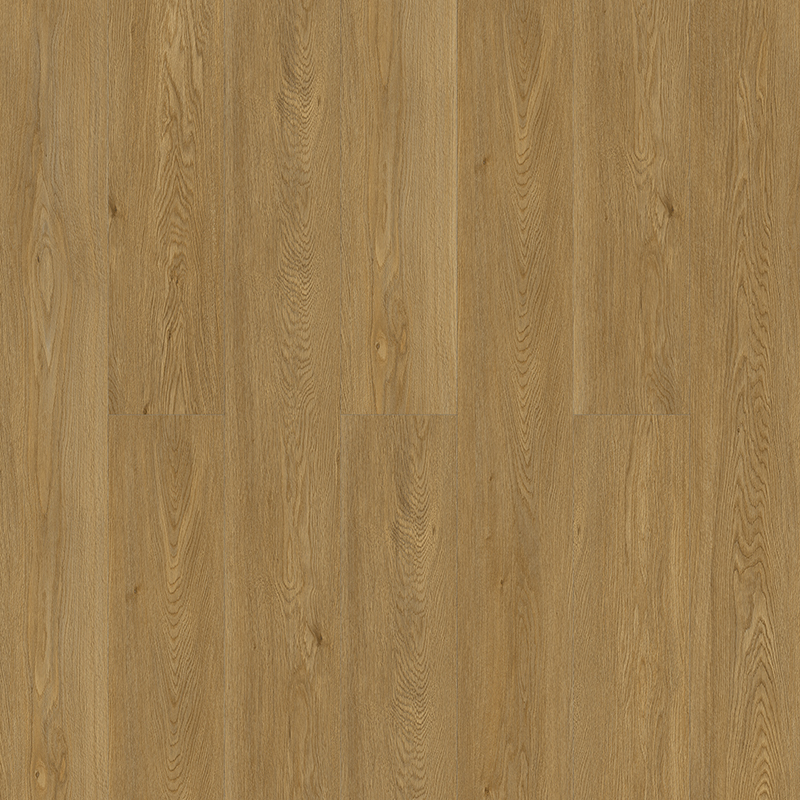
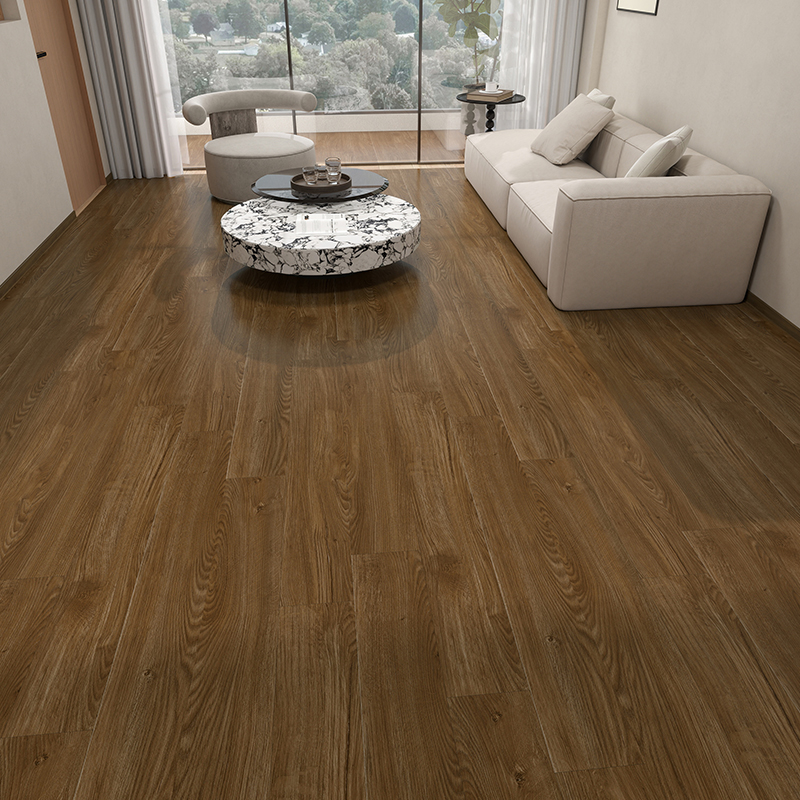 Natural Oak SPC Click Vinyl Plank FlooringA waterproof oak-look SPC plank with UV coating and Valinge click, suited to kitchens, hallways and rental spaces where heat and dents are concerns.View Product →
The SPC range covers wood decors from cathedral grain to whitewashed oak on a stone core, which suits hallways, kitchens and rental units where dents and heat are the real risk.
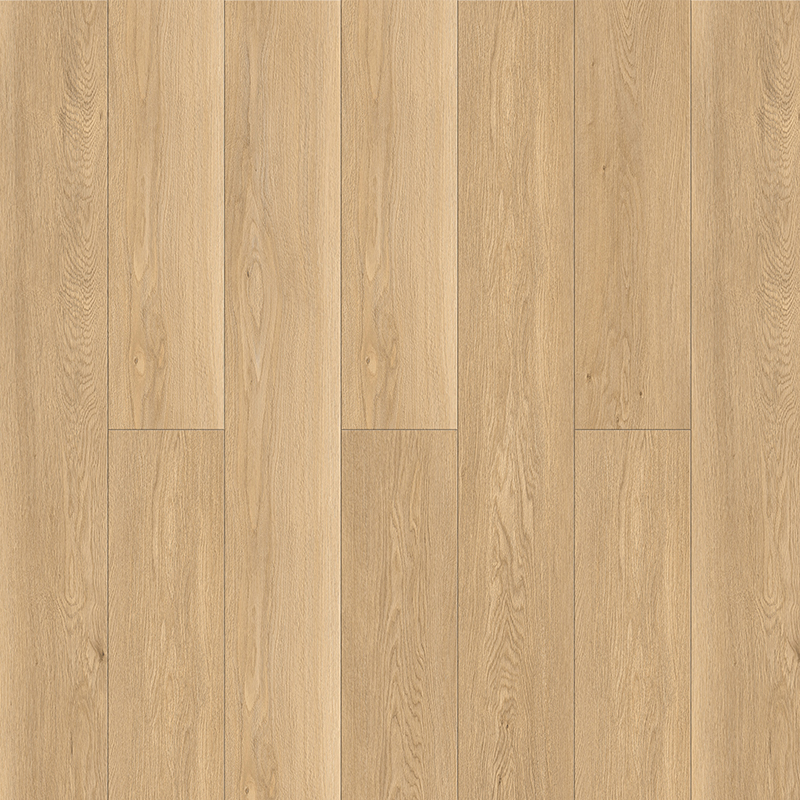
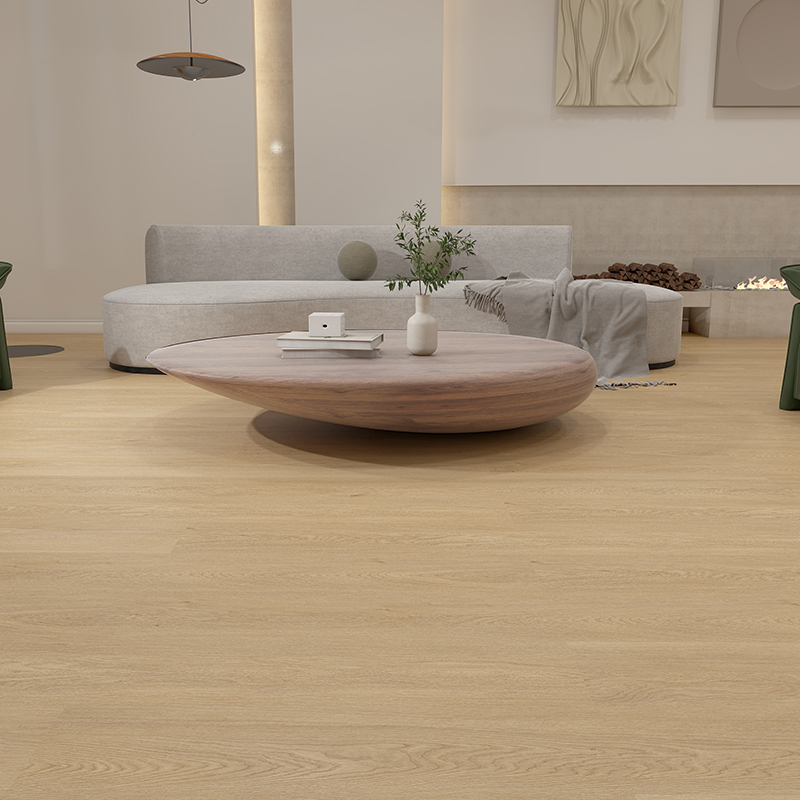 Light Natural Oak Ultra-Quiet Click Vinyl PlankAn embossed-in-register oak-look plank with sound-damping backing and Valinge click, suited to upper floors and quiet residential or office interiors.View Product →
The Ultra-Quiet line pairs an embossed-in-register surface with a sound-damping backing, aimed at upper floors where a WPC-style comfort profile is wanted without giving up too much rigidity.
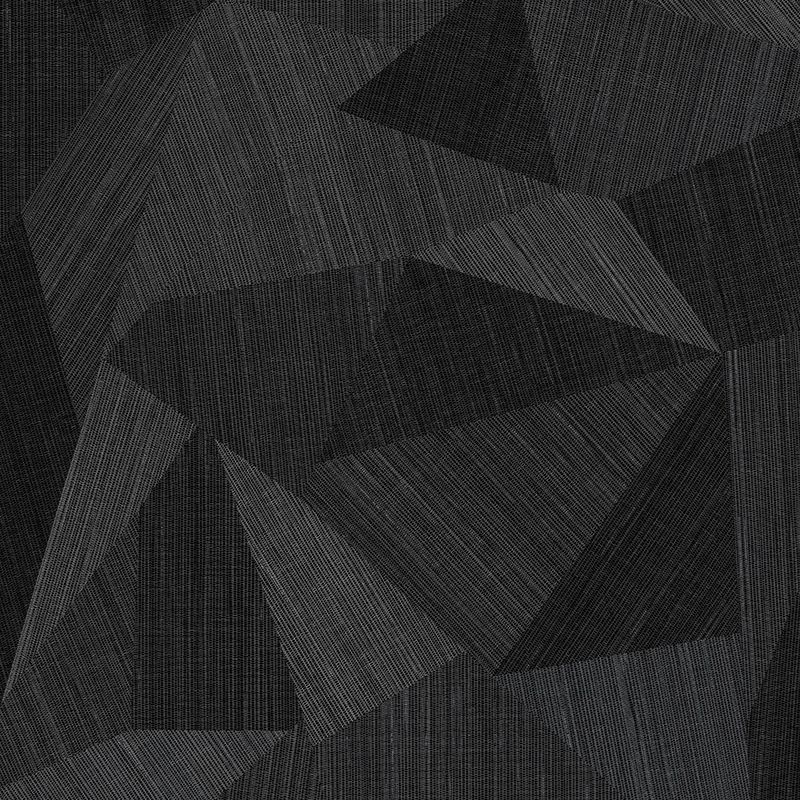 Dark Grey Geometric Carpet Texture ABA Vinyl PlankA multilayer ABA plank with dark grey geometric carpet texture and UV coating, offering a commercial-friendly middle option for offices and contemporary interiors.View Product →
ABA planks use a co-extruded multilayer core and carpet or geometric textures, a useful middle option for commercial interiors. You can browse the full flooring range to compare decors across all four constructions.
Before you commit to a container, order a box and click two planks together on a flat bench. Check that the locking lip engages with light hand pressure and that the embossed texture lines up with the print. A core comparison tells you which family to buy; a joint test tells you whether that factory's tolerance is good enough.
Frequently Asked Questions
Is WPC or SPC better for a basement?
Both are waterproof, so the deciding factors are temperature and flatness. A below-grade slab is cold and often slightly uneven, which favours a thicker WPC with an attached pad. If the slab sees wide temperature swings or the room carries heavy storage loads, SPC is the safer call.
Which core lasts longer?
The wear layer and the click joint fail before the core does. A 0.5 mm wear layer outlasts a 0.3 mm one in a hallway regardless of what sits beneath it. Foam cores dent under sustained point loads, so a WPC that looks worn at year eight is usually a furniture problem, not a material failure.
Can SPC go over existing tile?
Yes, if the tile is sound, well bonded and the grout lines are filled flush. The 4-6 mm build of SPC keeps transitions low at doorways and skirting, which is where a thicker WPC often forces extra trim work. Check the door swing before you commit.
Do both work with underfloor heating?
Both can, with surface temperature capped near 27 degrees C and a gradual warm-up. SPC's denser core moves less under heat, so it is usually the easier specification. WPC needs a wider perimeter gap and a slower first heat cycle to avoid peaking at the seams.



LET'S WORK TOGETHER
WELCOME TO JOIN!
-
+86-13616168066
-
[email protected]

-
+86-510-86525168
-
No.8 North Huanzhen Road, Mazhen,Xuxiake Town,Jiangyin City,Jiangsu Province,China
JOIN OUR MAILING LIST
Copyright © 2025 Jiangsu Herewin Environmental Technology Co., Ltd. All Rights Reserved. Vinyl Plank Flooring Manufacturers SPC Rigid Core Flooring Factory
