
 EN
EN
 English
 Español
 عربى
عربى 中文简体
中文简体

-
+86-13616168066

TEL:
-
+86-510-86525168

Fax:
-
No.8 North Huanzhen Road, Mazhen,Xuxiake Town,Jiangyin City,Jiangsu Province,China

Address:
Feel Free To Contact Us :
-
+86-13616168066
-
-

Sep. 18, 2026
Industry News
Rigid Core Flooring Explained: Core Types, Key Specs, and What to Check Before Buying
Content
A cast-iron skillet dropping at an angle, a 90-kilogram refrigerator standing on four small feet, and a dog that takes every hallway at a full sprint: these everyday tests separate flooring categories better than any brochure. Rigid core flooring was developed precisely because flexible vinyl kept failing them. The short answer to what makes it different is the core: a dense, mineral-filled composite—most commonly SPC, or stone plastic composite—that resists dents, blocks water completely, and holds its dimensions where softer floors swell, cup, or telegraph every flaw in the subfloor. That core determines what the floor can survive, and it also changes what you should verify before buying.
What Rigid Core Flooring Actually Is
Rigid core flooring is a category of luxury vinyl plank built around a stiff structural core. In the most common construction, the core blends limestone powder (calcium carbonate) with PVC resin and stabilizers, often accounting for more than 60% of the core by weight. The finished plank therefore behaves closer to a thin ceramic tile than to a sheet of soft vinyl, which explains both its strengths and its installation quirks.
A typical plank stacks four layers:
- Wear layer: a clear, abrasion-resistant film, usually 0.3 mm to 0.7 mm, that absorbs every scratch and scuff.
- Decor film: the printed layer that produces wood, stone, or carpet appearances.
- Rigid core: the structural body that provides dent resistance, waterproofing, and dimensional stability.
- Pre-attached pad: 1 mm to 1.5 mm of IXPE or EVA foam on the underside for sound and minor leveling, often optional.
Because the core carries the structural work, planks between 4 mm and 8 mm total thickness are more stable than the thick flexible LVT they replaced. Thickness no longer has to do all the work; the core does the rest. A standard wood-pattern SPC click plank shows this architecture clearly:
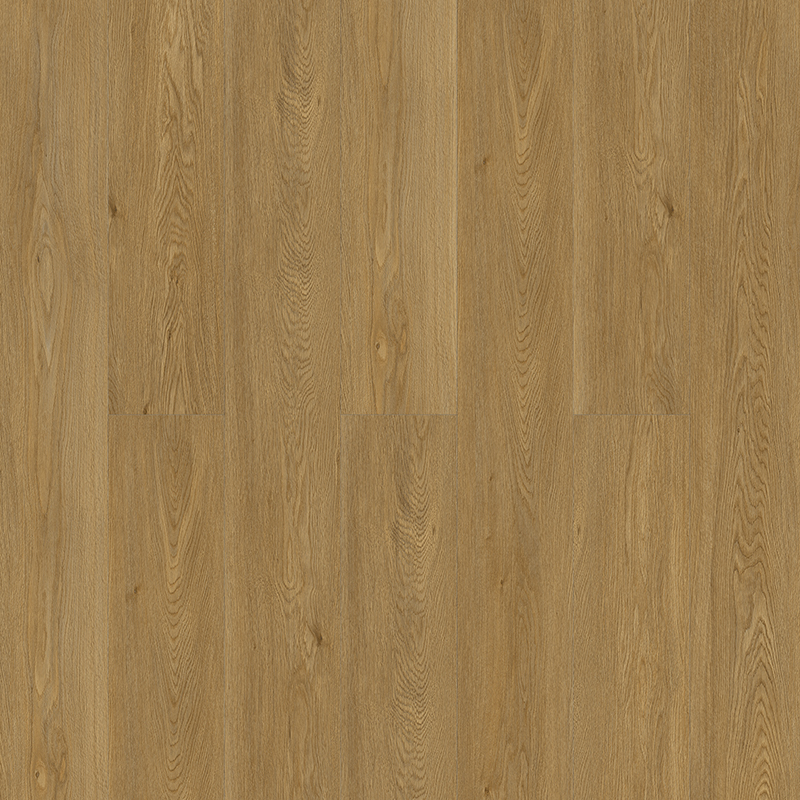
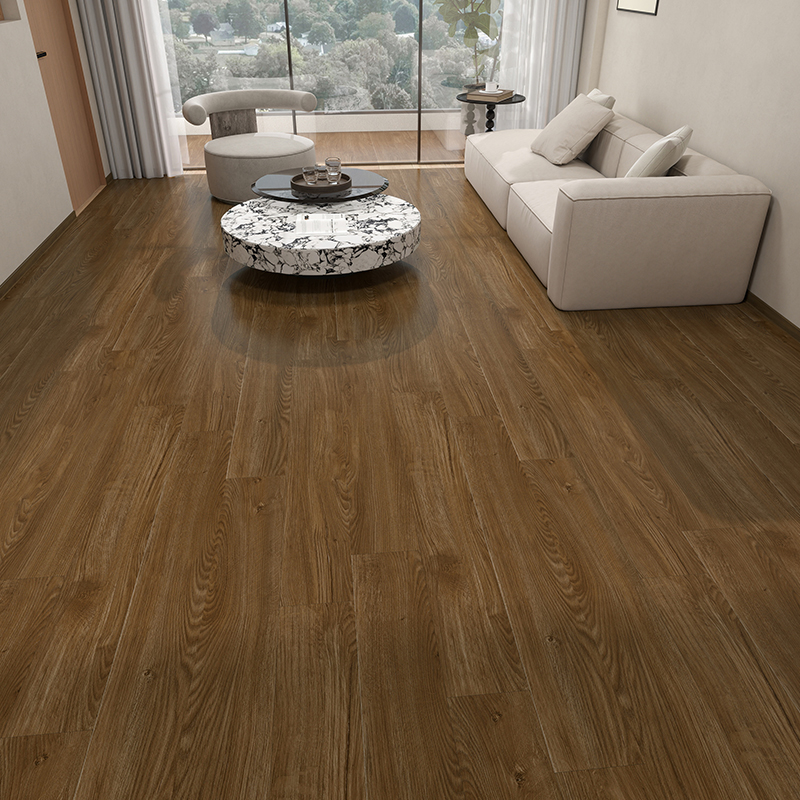 Natural Oak Wood Pattern SPC Click Vinyl Plank FlooringThis standard wood-pattern SPC click plank illustrates how a rigid core carries the structural work. It is 100% waterproof with a Valinge click system, UV coating, and multiple length, width, and bevel options for residential or commercial use.View Product →
Rigid Core, WPC, and Mineral Cores Compared
Not every stiff floor uses the same recipe, and the differences surface under a chair leg or a stiletto heel. Three core chemistries dominate the category:
| Attribute | SPC Rigid Core | WPC | Mineral Core (MgO) |
|---|---|---|---|
| Core recipe | Limestone powder in PVC | Foamed PVC with wood fiber | Magnesium oxide minerals |
| Feel underfoot | Firm and dense | Soft and cushioned | Firm |
| Dent resistance | High | Moderate | High |
| Dimensional stability | Very stable in heat and cold | Moves more with temperature | Stable; newer category |
| Typical priority | Durability and waterproofing | Comfort and warmth | Fire performance |
WPC feels warmer and quieter underfoot, which is why it survives in bedrooms where comfort matters more than hardness. The trade-off appears under point loads: appliance feet and heels can leave permanent dimples in a foamed core. SPC gives up some cushioning for a much harder body, which is why it dominates kitchens, entryways, retail units, and homes with large pets. Mineral cores built on magnesium oxide target fire performance and remain a newer, less widely stocked category, so treat them as a specialist option rather than the default.
The Specs That Decide Real Performance
Three numbers on a spec sheet predict long-term performance better than any marketing term:
- Wear layer thickness. This clear film takes the abrasion. 0.3 mm (12 mil) suits residential rooms; 0.5 mm (20 mil) handles light commercial spaces such as offices and boutiques; 0.7 mm (28 mil) is the practical entry point for heavy retail and public buildings.
- Total thickness. Planks run from 4 mm to 8 mm. Extra thickness feels more solid and bridges slight subfloor variation, but it does not add surface life. A 7 mm plank with a 0.2 mm wear layer will wear through years before a 5 mm plank carrying 0.5 mm.
- Locking profile and certifications. Click joints should engage with consistent resistance and sit nearly flush after assembly. On the paperwork, current third-party test reports—SGS and BV are standard in this industry—plus low-VOC certifications such as FloorScore show that the factory controls what it ships.
Two procurement risks deserve names. Oversold thickness comes first: some listings promote extra-thick planks that quietly pair a thin wear layer with a thick pad, so you pay for foam and receive less protection. Batch variation comes second: core density can drift between production runs, which appears later as inconsistent stiffness across pallets. Ask for wear layer data per SKU and recent test reports rather than certificates issued years ago.
Where Rigid Core Flooring Performs Best
The format earns its keep in four situations in particular:
- High-traffic zones: entryways, hallways, kitchens, and retail floors see constant abrasion, and a hard core with a proper wear layer is built for that duty cycle.
- Wet and below-grade spaces: the core is 100% waterproof, so basements, bathrooms, and laundry rooms do not swell when spills sit or humidity climbs.
- Rooms with temperature swings: sunrooms, enclosed porches, and floors over radiant heat stress softer cores; rigid cores hold their joints tight. Follow the manufacturer's surface temperature limit over heated slabs, usually around 27°C to 29°C.
- Projects and rentals: multi-family units and commercial fit-outs need floors that tolerate unconditioned storage during construction and heavy move-in traffic afterward.
In wet rooms, tile-look planks deliver slate and stone aesthetics without grout lines to seal or maintain:
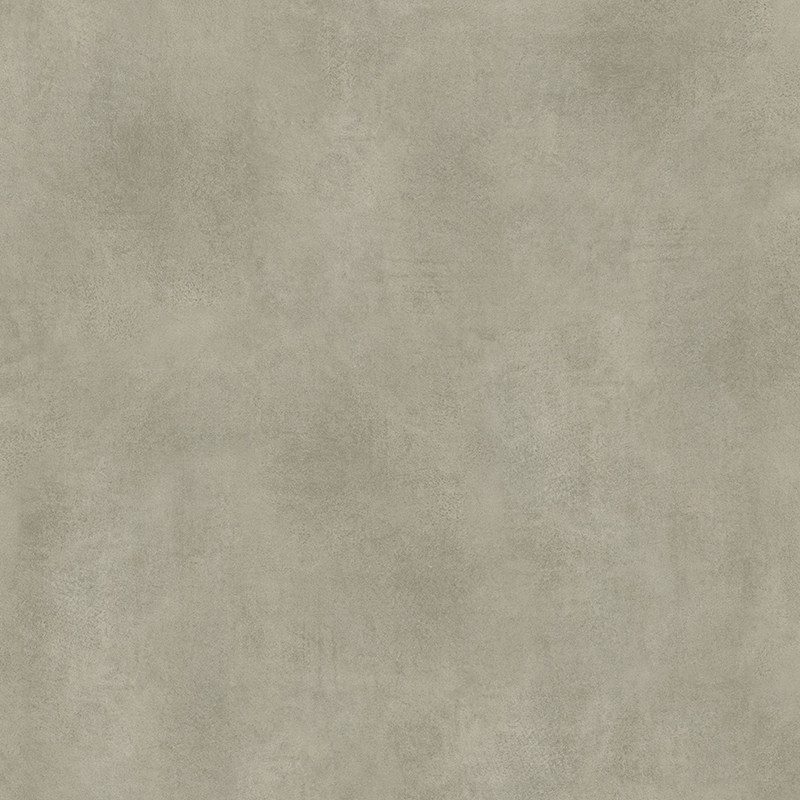
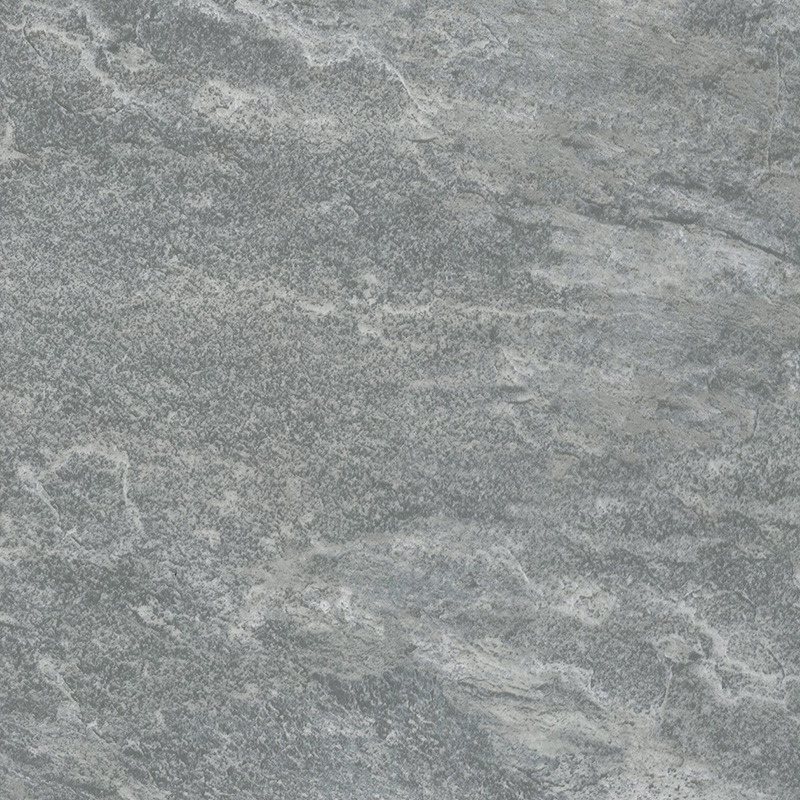 Gray Slate-Style Tile Texture EPC Click Vinyl Plank FlooringTile-look planks like this gray slate-style EPC flooring bring stone aesthetics without grout lines to seal or maintain. Fully waterproof with an SPC/ABA core and Valinge click installation, it suits wet rooms and busy living or commercial spaces.View Product →
Installation Realities to Plan For
Click-lock rigid core is among the most DIY-friendly floating floors available, yet the subfloor decides whether it still looks flat in year three.
Flatness is the first checkpoint. Most manufacturers specify a maximum deviation of 3/16 inch over a 10-foot span, roughly 5 mm across 3 meters. Unlike flexible vinyl, a rigid plank will not drape into dips; low spots become hollow-sounding zones where the joint flexes under every step. Grinding or a self-leveling compound costs far less than replacing planks later—our guide to how level a floor needs to be for SPC covers the tolerances and the measurement method in detail.
Three more rules protect the result: acclimate the planks in the installation room for 48 hours, leave a 6 mm to 10 mm expansion gap at walls and fixed objects, and stagger end joints between rows.
One honest trade-off remains: a dense core carries more footstep click than soft vinyl. A pre-attached pad reduces it, but dedicated acoustic constructions go further. Where a nursery or an upstairs bedroom is the target, an ultra-quiet EIR plank is worth the premium:
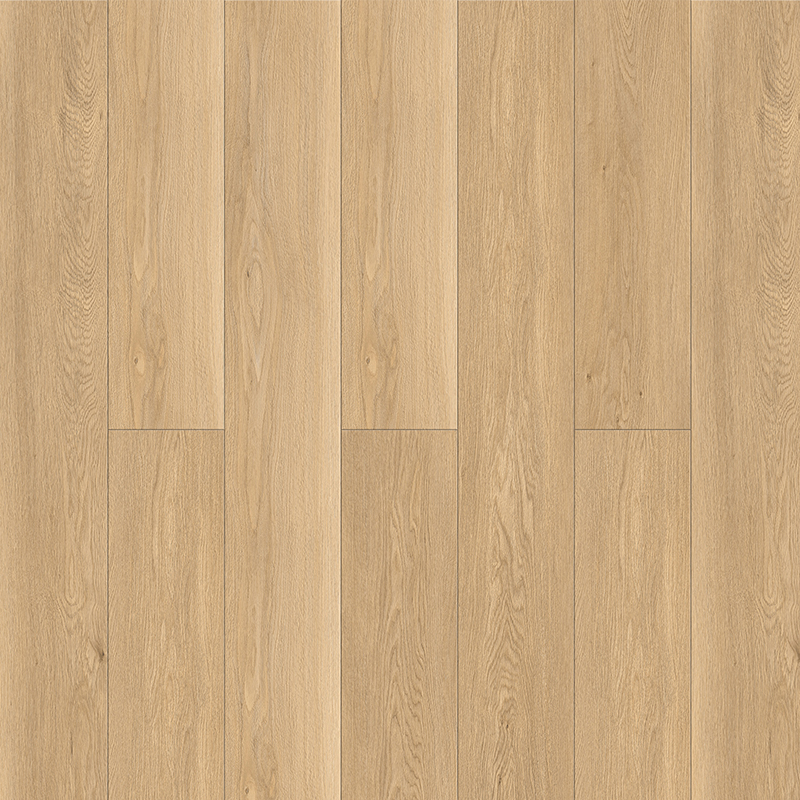
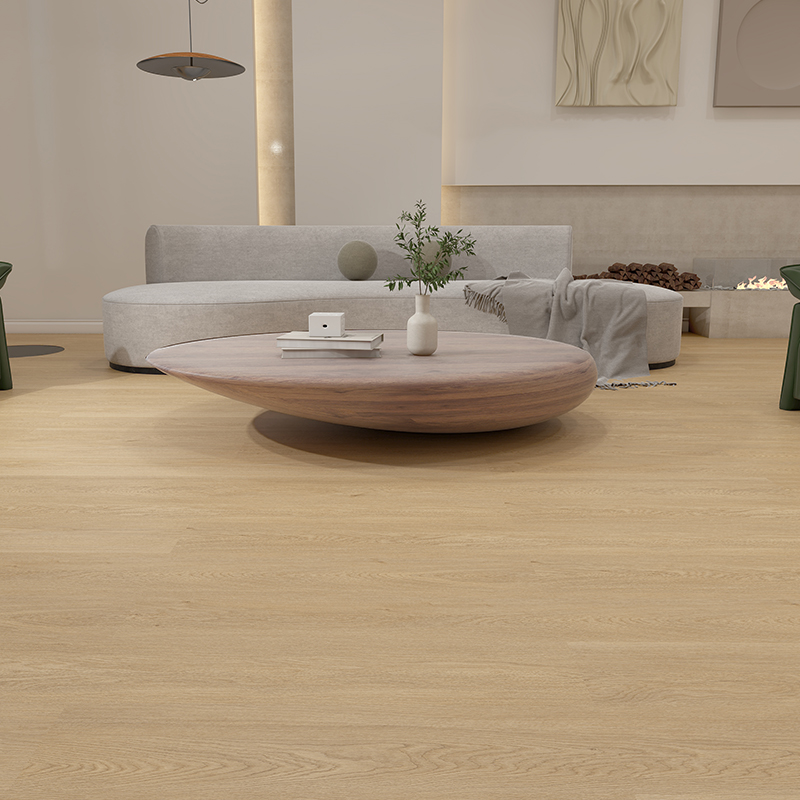 Light Natural Oak Grain EIR Ultra-Quiet Click Vinyl Plank FlooringDense cores can carry footstep click, so dedicated acoustic constructions matter in nurseries and upstairs bedrooms. This ultra-quiet EIR oak plank reduces walking noise while staying 100% waterproof, anti-slip, and quick to install with Valinge clicks.View Product →
Matching Looks and Textures to the Space
With the technical side settled, the visible choices carry the design weight:
- Wood-look planks: oak, walnut, and cathedral-grain styles remain the default for living rooms and open-plan spaces.
- Tile-look planks: slate, quartzite, marble, and cement visuals suit kitchens, bathrooms, and commercial interiors.
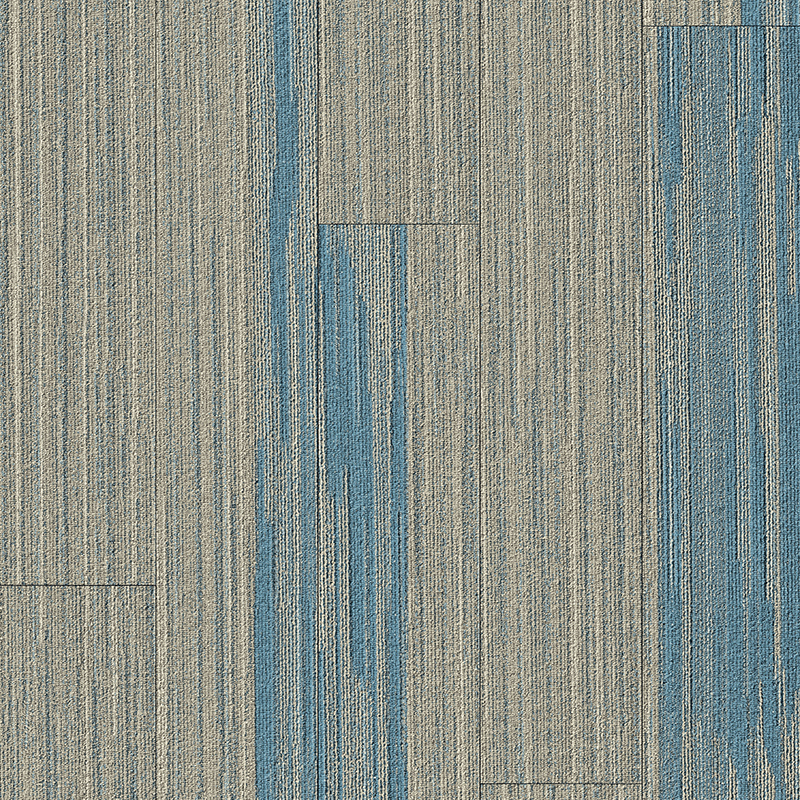
- Carpet-look planks: rare outside rigid core, they add a soft textile feel to bedrooms and hotel rooms with none of the fiber maintenance.
- Embossed-in-register (EIR) textures: the surface texture is pressed to align exactly with the printed grain, so light catches the plank where the wood figure actually sits; browsing EIR pattern options shows the difference immediately.
Finish choice matters too: high gloss reflects light dramatically but shows scratches sooner, while matte surfaces hide daily wear and suit commercial traffic.
The purchase decision compresses into three checks: match the core type to the room's demands, verify the wear layer against expected traffic, and budget for subfloor preparation before the planks arrive. Suppliers that publish complete specifications, hold current SGS and BV test reports, and offer construction variants—from standard SPC to formaldehyde-free ABA and ultra-quiet builds—make those checks straightforward. Get the three checks right, and rigid core flooring delivers exactly what its structure promises: a floor that shrugs off water, survives the refrigerator and the dog, and still lies flat a decade later.


LET'S WORK TOGETHER
WELCOME TO JOIN!
-
+86-13616168066
-
[email protected]

-
+86-510-86525168
-
No.8 North Huanzhen Road, Mazhen,Xuxiake Town,Jiangyin City,Jiangsu Province,China
JOIN OUR MAILING LIST
Copyright © 2025 Jiangsu Herewin Environmental Technology Co., Ltd. All Rights Reserved. Vinyl Plank Flooring Manufacturers SPC Rigid Core Flooring Factory
