
 EN
EN
 English
 Español
 عربى
عربى 中文简体
中文简体

-
+86-13616168066

TEL:
-
+86-510-86525168

Fax:
-
No.8 North Huanzhen Road, Mazhen,Xuxiake Town,Jiangyin City,Jiangsu Province,China

Address:
Feel Free To Contact Us :
-
+86-13616168066
-
-

Aug. 27, 2026
Industry News
Resilient Flooring Explained: Types, Benefits, and How to Choose the Right One
Content
Resilient flooring exists for the rooms that take the most punishment: the kitchen where water and crumbs hit the floor daily, the clinic corridor crossed by loaded carts, the apartment living room where a dog skids around the corner. In plain terms, resilient flooring is any floor covering with a firm, non-textile surface that gives slightly underfoot and then bounces back to shape. If you need a floor that shrugs off spills, cushions footsteps, and costs far less than stone or hardwood to buy and maintain, this is the category where most homes and commercial projects land, and understanding how it is built is the fastest way to avoid paying for the wrong product.
What Counts as Resilient Flooring
The definition is narrower than many shoppers assume. Carpet, solid hardwood, laminate, ceramic tile, and natural stone all sit outside it. Building codes and industry glossaries describe resilient flooring as non-textile material with a relatively firm surface that nevertheless has give: it deforms briefly under a heel, a castor wheel, or a dropped object, then recovers instead of staying dented or cracking.
In practice the umbrella covers six product families: sheet vinyl, luxury vinyl tile and plank (LVT/LVP), rigid core vinyl, linoleum, rubber, and cork. What they share is an engineered, polymer-based structure that pairs a tough wear surface with internal flexibility. A laminate floor can look almost identical on a showroom shelf, yet its fiberboard core swells when wet and crushes permanently under point loads, which is exactly why it fails the definition.
The Main Types and Where Each One Fits
Sheet vinyl arrives in rolls up to about four meters wide, so a typical bathroom or galley kitchen installs with few or no seams. It remains the budget choice for wet rooms, and modern digital printing has narrowed the visual gap with more expensive products considerably.
Luxury vinyl tile and plank pairs a clear wear layer with a printed film over a flexible vinyl body. It is easy to cut, installs with clicks or adhesive, and dominated the residential market for a decade because it brought realistic wood and stone visuals onto a waterproof floor.
Rigid core vinyl changed the calculation for renovators. SPC (stone plastic composite) uses a mineral-filled core that resists indentation and stays dimensionally stable in sunny rooms and over imperfect subfloors, which is why it is specified for high-traffic retail, offices, and busy family rooms. EPC (engineered polymer composite) runs lighter and quieter underfoot with a more forgiving feel, and has become a favorite for refurbishment projects where speed, comfort, and cost control all matter.
Linoleum, made from linseed oil, wood flour, and jute, still earns its place in hospitals and schools thanks to its natural composition and repairability. Rubber flooring serves gyms, laboratories, and transit platforms where slip resistance and fatigue relief matter more than decoration.
| Type | Typical structure | Best suited to | Main trade-off |
|---|---|---|---|
| Sheet vinyl | Flexible vinyl sheet with welded seams | Budget bathrooms and kitchens | Fewer decors, full adhesive install |
| LVT / LVP | Flexible core under a wear layer and film | Living areas, bedrooms, light commercial | Softer body can dent under point loads |
| SPC rigid core | Mineral-filled core with click edges | High traffic, kitchens, ground floors | Harder underfoot, heavier planks |
| EPC rigid core | Polymer core with click edges | Renovations, apartments, quieter zones | Newer category with fewer references |
| Linoleum | Natural binders on a jute backing | Healthcare and education | Needs periodic sealing |
| Rubber | Homogeneous or studded rubber | Gyms, labs, transit areas | Limited decors, higher cost |
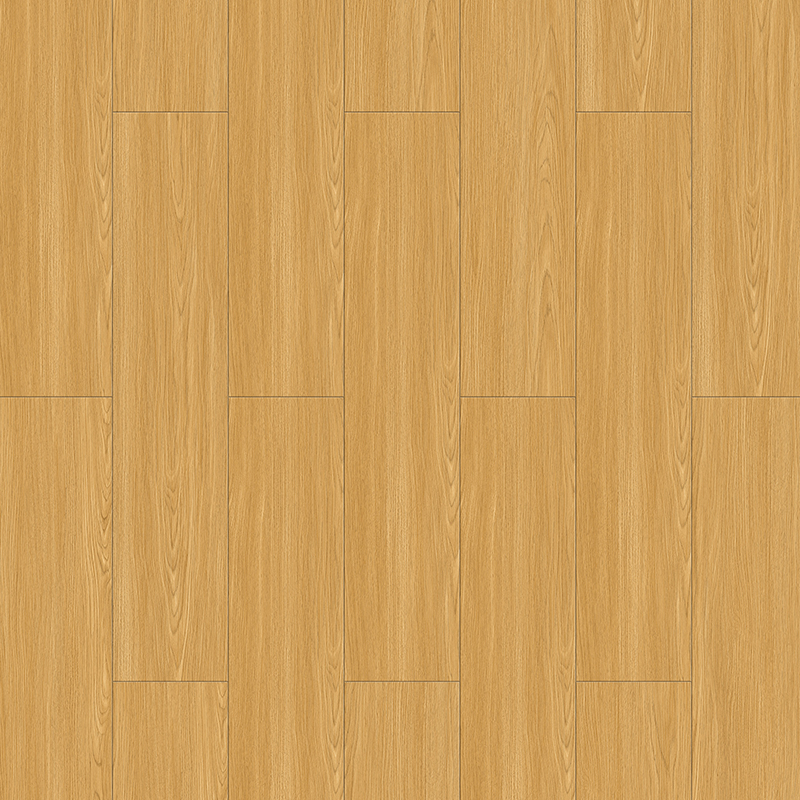
For a concrete example of how a wood-look SPC plank is specified, this natural oak format is typical of the category:
Natural Oak Wood Pattern SPC Click Vinyl Plank Flooring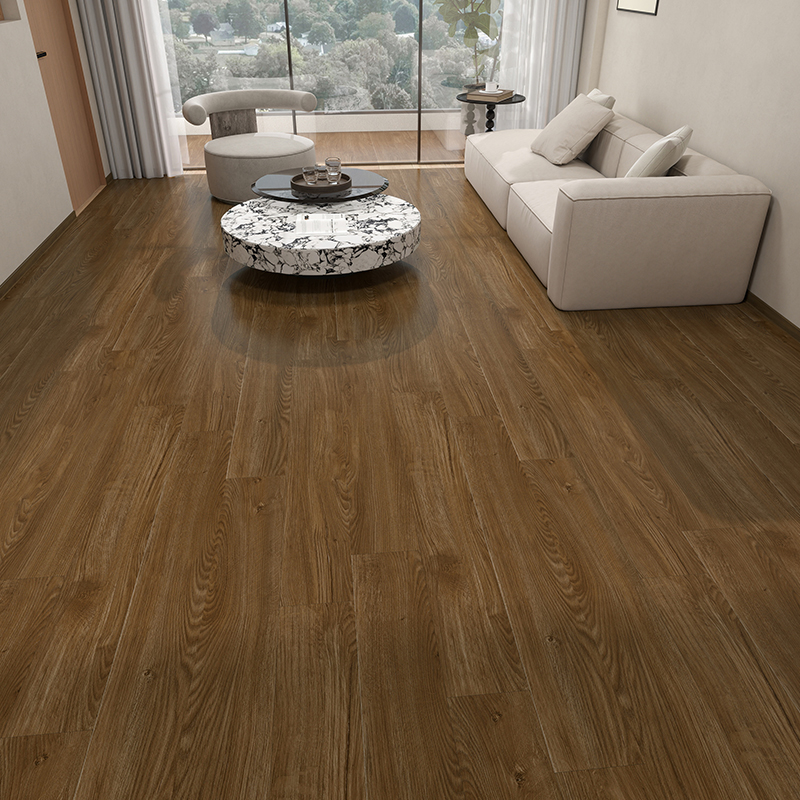 Natural Oak Wood Pattern SPC Click Vinyl Plank FlooringThis wood-look SPC plank shows how the category is specified, with multiple plank sizes, bevel options, EIR or brushed textures, UV coating, Valinge click installation, and 100% waterproof construction for moisture-prone areas.View Product →
Why the Layers Matter More Than the Look
Every resilient floor is a stack of engineered layers, and both price and lifespan are decided by the layers you cannot see.
The Wear Layer
The transparent top film takes every scuff, so its thickness drives service life. As a working rule, 0.3 mm (about 12 mil) suits bedrooms and guest rooms, 0.5 mm (20 mil) handles living rooms, hallways, and light retail, and 0.7 mm (28 mil) and above is the territory of commercial corridors and shops. Skimping here is the most common reason a floor looks gray and scratched within three years.
The Printed Film and Surface Finish
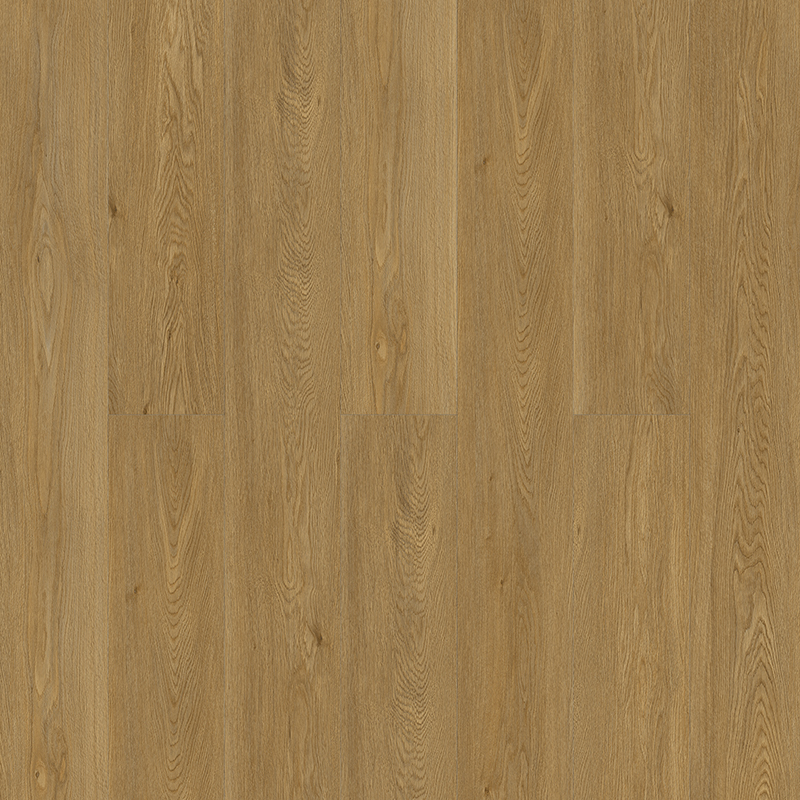
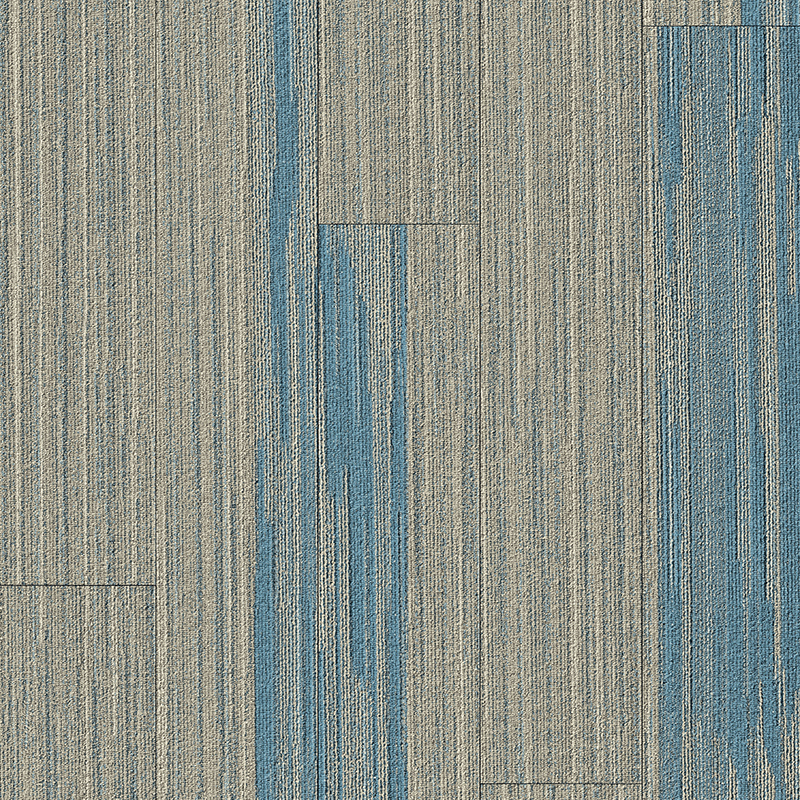
Below the wear layer, a printed film carries the visual, whether that is wood plank, stone tile, or even a woven carpet pattern on a fully vinyl surface. Embossed-in-register (EIR) pressing aligns the surface texture with the print grain by grain, so pores and bevels land exactly where the eye expects them, and the difference against a flat print is obvious in raking light. Finishes trade practicality against formality: matt surfaces hide micro-scratches and suit homes with pets, while high gloss reads more formal and shows every mark. If you want to judge how far these decors have come, browsing a dedicated embossed-in-register surface collection makes the texture alignment easy to see.
The Core and the Backing
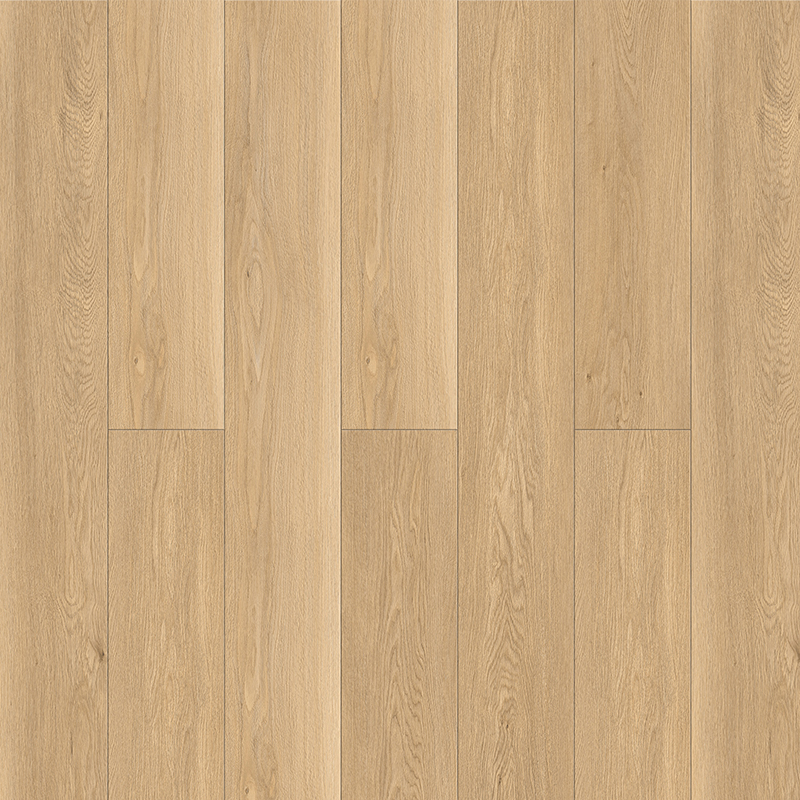
The core decides whether a floor dents under a piano castor or a stiletto heel, and whether it telegraphs every lump in the subfloor. Flexible vinyl cores feel warmer and softer underfoot, while mineral-filled rigid cores hold their shape and bridge small imperfections. The backing then fine-tunes acoustics and comfort, because an integrated foam layer cuts the hollow clicking sound that otherwise carries through upper floors. For bedrooms and upper-story living rooms, a purpose-built quiet plank with an acoustic backing is often worth the premium:
Light Natural Oak Grain Embossed-in-Register Ultra-Quiet Click Vinyl Plank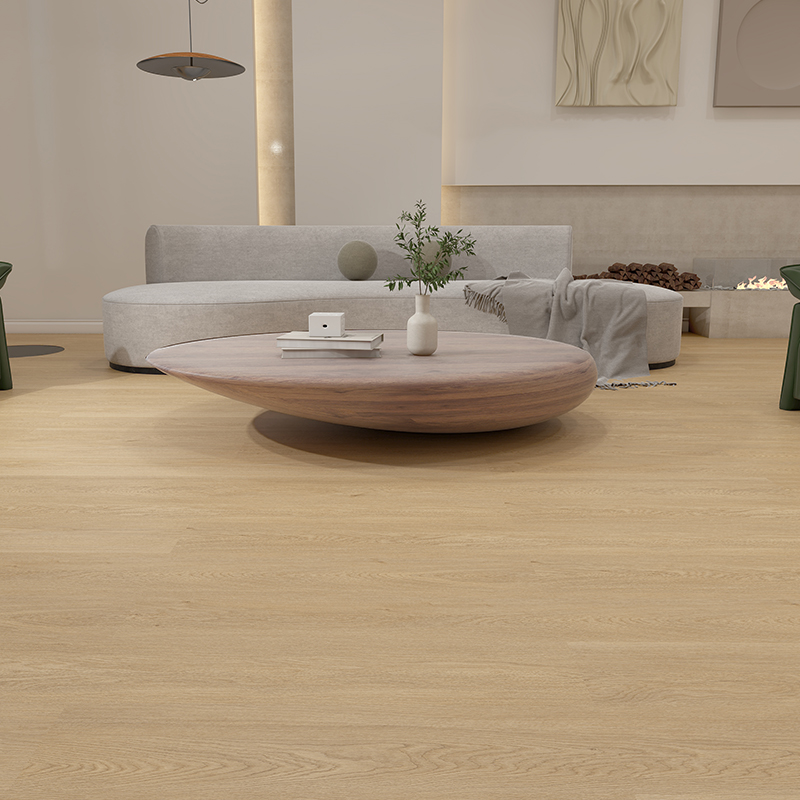 Ultra-Quiet Light Oak EIR Click Vinyl Plank FlooringWith an integrated acoustic backing that reduces walking noise, this light oak EIR plank suits bedrooms and upper-story living rooms where a quiet floor justifies choosing a purpose-built option.View Product →
Where Resilient Flooring Earns Its Keep
Wet zones are the clearest case. Quality resilient flooring does not absorb water, so spills, pet accidents, and rain tracked in from outside stop being emergencies in kitchens, bathrooms, laundry rooms, and basements.
Heavy traffic is the second case. Retailers, clinics, schools, and offices specify resilient materials because the surface takes cart traffic, castor chairs, and thousands of footsteps a day without the grout maintenance of tile or the refinishing cycle of hardwood. If you are weighing a busy commercial or household installation, this durability guide for high-traffic areas walks through the wear-layer and upkeep decisions in detail.
Multi-story homes and apartments are the third case. Impact sound travels through hard floors, and resilient products, especially those with acoustic backings, measurably reduce the noise that reaches the room below.
Renovation is the fourth. At 4 to 8 mm thick, click-lock resilient planks float over sound existing floors and skip demolition, dust, and days of downtime. Tile-look rigid planks are particularly effective here, because they deliver stone visuals with no grout lines to scrub:
Gray Slate-Style Tile Texture EPC Click Vinyl Plank Flooring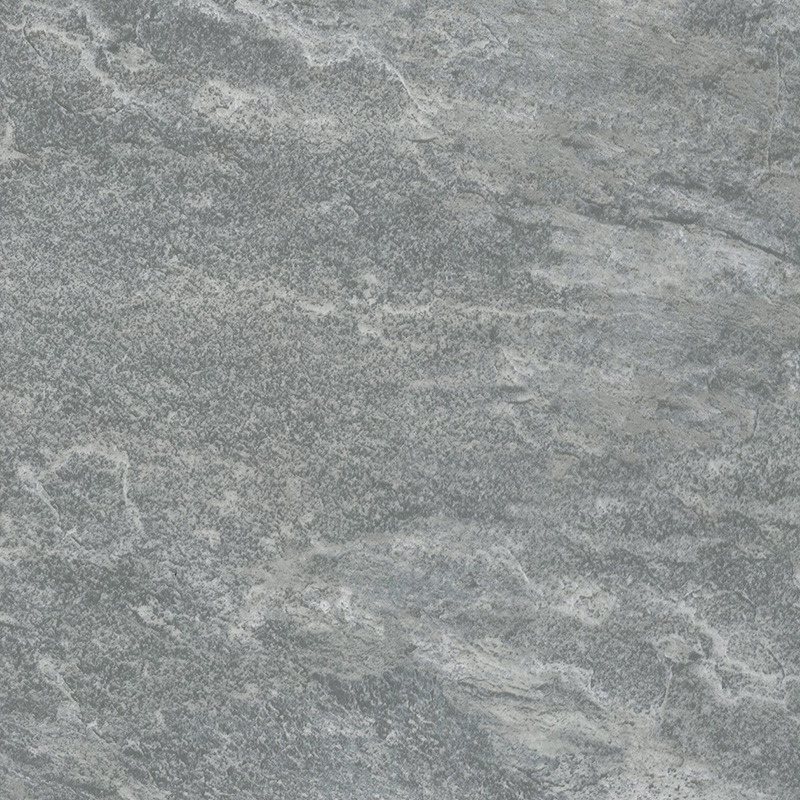 Gray Slate-Style Tile Texture EPC Click Vinyl Plank FlooringFloating click-lock installation at 4 to 8 mm lets this gray slate-look plank go over sound existing floors without demolition, delivering stone visuals with no grout lines to scrub.View Product →
Five Specs to Check Before You Buy
Two products can carry near-identical photos and behave completely differently in place. Before committing, put these five checks in front of any supplier:
- Wear layer thickness in writing: 0.3 mm for bedrooms, 0.5 mm for living zones and light commercial, 0.7 mm or more for shops and corridors.
- Total thickness and core composition: 4 to 8 mm is the normal click-lock range, and thicker, denser cores resist indentation while bridging small subfloor flaws.
- Subfloor flatness tolerance: most click systems ask for a level surface within roughly 3 to 5 mm across two meters, so request the exact figure rather than a vague promise of a flat floor.
- Emissions documentation: ask for test reports on VOC and formaldehyde classes, and check whether certificates from bodies such as SGS or BV back up any formaldehyde-free claim.
- System completeness: confirm which locking profile is used, which underlay is recommended, and whether matching trims and stair nosings exist for the same range.
One practical shortcut is to buy from manufacturers that produce rather than only repackage. A factory such as Jiangsu Herewin Environmental Technology, which makes its SPC, EPC, and ABA composite planks under the Nature House brand, can pull these documents directly from production instead of routing every question through a trading layer.
Installation and Everyday Care
Click-lock resilient planks are among the most DIY-friendly floors on the market, but three habits decide the outcome. Let the planks acclimate in the room for about 48 hours, keep an expansion gap of 6 to 10 mm at every wall and fixed object, and never tap a joint closed over debris, because grit trapped in a click seam becomes a lifelong creak. Glue-down and loose-lay sheet formats are better left to professional installers, particularly across large commercial areas.
Care is deliberately boring. Dry dust or vacuum weekly, damp mop with a pH-neutral cleaner, and fit felt pads under furniture legs. Skip steam mops and solvent-based cleaners, which can haze the wear layer. A floor specified correctly for its traffic will usually outlast the furniture standing on it.
The Practical Bottom Line
Match the category to the room, then judge the layers. Resilient flooring wins wherever water, weight, and noise converge: kitchens, bathrooms, hallways, clinics, shops, and every floor above someone else's ceiling. Within the category, rigid core planks carry the heaviest loads, flexible LVT balances comfort against cost, and specialty materials serve acoustic or hygiene-critical spaces. Check the wear layer first, the core second, and the paperwork before the price, and the floor you install will still look like the showroom sample years from now.


LET'S WORK TOGETHER
WELCOME TO JOIN!
-
+86-13616168066
-
[email protected]

-
+86-510-86525168
-
No.8 North Huanzhen Road, Mazhen,Xuxiake Town,Jiangyin City,Jiangsu Province,China
JOIN OUR MAILING LIST
Copyright © 2025 Jiangsu Herewin Environmental Technology Co., Ltd. All Rights Reserved. Vinyl Plank Flooring Manufacturers SPC Rigid Core Flooring Factory
